


Condition monitoring in marine and offshore
In the 1960s, Danish shipowner A.P. Møller´s bitter experience was that the cargo pumps of his tankers broke down far too often, without forewarning. An inventor and an enterprising financier decided to do something about it. The SPM method was invented, and since then, SPM has been present in the maritime industry.
Maximize reliability with condition monitoring in marine and offshore
Also in the early seventies, the entire fleet of British Petroleum tankers, at that time some 80 vessels, were equipped with shock pulse meters for detecting damaged rolling element bearings before they failed. Today, our condition monitoring instrumentation is installed on board over a thousand vessels.
The maintenance on board vessels has traditionally been based on equipment running time. High demands on the environment, reliability, and ship safety have made condition monitoring widely accepted by classification societies, and it is already an option for most vessels. Knowing the condition of your machinery is crucial to avoiding sudden failures and maximizing equipment lifetime. Timely failure prediction and detection are vital for reducing manpower and spare part inventory to increase profit.

"We were looking for a supplier who could solve the specialized problems of our clients regarding slow turning machinery. We also wanted a software platform that was ‘analysis friendly. But the most principal factor in our decision to buy the Leonova Diamond was the HD technology."
Bárður Heinason, Machine technician, MEST, Faroe Islands
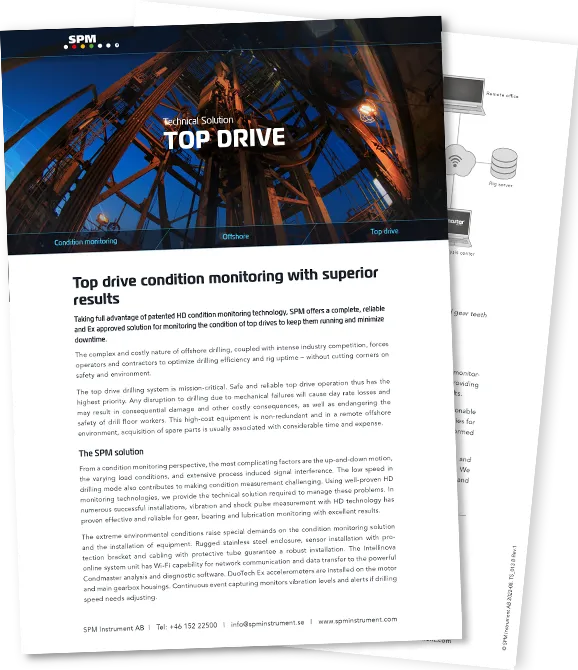
Condition monitoring solution for top drives ensures reliability
Since top drive drilling is mission-critical and of the highest priority, SPM offers an Ex-approved condition monitoring solution for top drives to keep them running and minimize downtime.
In addition to handling fluctuating operating conditions such as RPM, load, and torque, the solution monitors:
- Bearing condition
- Gear dynamic behavior
- Gear teeth wear
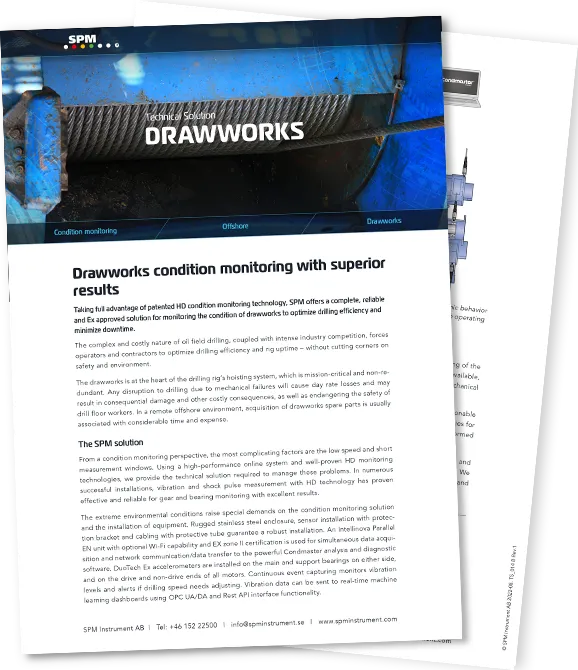
Complete and reliable condition monitoring solution for drawworks
SPM offers an Ex-rated solution for monitoring the condition of drawworks to optimize drilling efficiency and minimize downtime.
Using HD Technologies, the solution is effective for gear and bearing monitoring. The condition monitoring system has protective features to withstand extreme conditions and can send vibration data to real-time machine-learning dashboards.
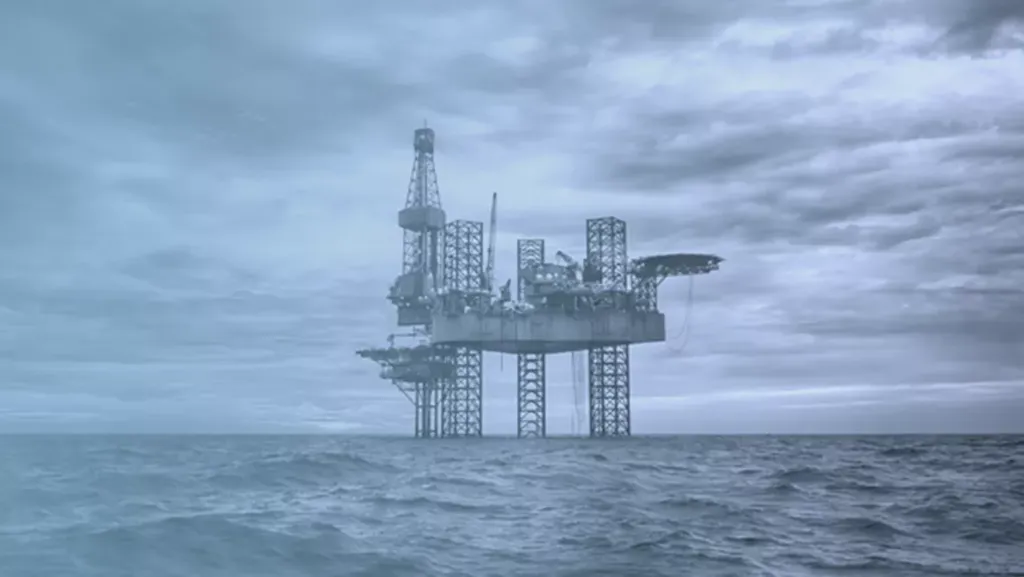

Condition monitoring solutions for the marine and offshore industries
Since our beginnings, we have continuously developed our product range to include portable instruments, online systems, and accessories specifically suited for shock pulse monitoring of critical rotating machines on board, like pumps, fans, turbochargers, azipods, and electrical motors. Vibration monitoring equipment is used on applications where other problems such as alignment, impeller problems, gear problems, and balancing problems occur. On slowly rotating machinery, the SPM HD® measuring technique can be used with benefit. SPM HD uses RPM-based sampling frequency and algorithmic correlation techniques to ensure the highest possible signal quality and razor-sharp spectrums for analysis.

Portable instruments
Our range of handheld instrumentation includes equipment for shock pulse measurement, vibration severity measurement, and vibration spectrum analysis.
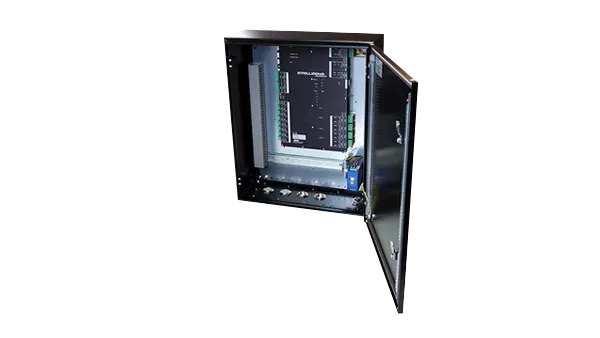
Intellinova Parallel EN
Intellinova Parallel EN is a powerhouse of functionality and performance, ideal for condition monitoring of industrial equipment with high availability demands.

Condition monitoring in explosive environments
Our high-performance portable and online equipment are also available for potentially explosive environments.

HD Technologies
High-definition condition monitoring technologies provide exceptional pre-warning times, maximizing the planning horizon for maintenance and repairs. In turn, this enables fully utilizing asset life, cutting repair costs, and minimizing the consequences of unplanned downtime.
Certified for the marine and offshore industry


Condition-based maintenance in the maritime industry
The trend leans towards larger vessels operated by less crew. Operating large ships with a relatively small crew puts focus on how to use person-hours more effectively. We can learn from condition-based maintenance (CBM) strategies implemented by the land-based industry exposed to international competition and adopt this way of working in the maritime industry. A big part of the maintenance work onboard vessels is, in fact, unnecessary and a product of tradition and previous demands by the class.
The combination of unskilled labour and inspections by classification societies of machines stripped for visual inspections have contributed to the extreme workload in many machine rooms. The redundant machines are installed for safety but are mainly used to compensate for the problems this maintenance approach gives.
CBM are routine measurements and inspections carried out by a selected crew trained to evaluate the results and determine possible corrective maintenance. The redundant equipment is included in the inspection to ensure that they work when needed for safety reasons. The CM software can be connected to the maintenance management system to issue work orders and get the action reported back into the system automatically. The machines are prepared with adapters and transducers to ensure quality readings. Critical equipment like turbochargers can be equipped with online systems for extra protection.
The condition information is used to get an early warning for replacing parts before failure. The readings can also be used for class inspection as an alternative to opening up machines for inspections.
CBM increases reliability and requires fewer person-hours by eliminating unnecessary maintenance caused by time-based inspections and the extra work that catastrophic failures give. The work can be planned and give the crew stable working hours. In addition, there is a reduction in spare part consumption, allowing a smaller stock and making the number crunchers happy.